The system
By the numbers
DIY vs. hiring an installer
As of October 5, 2026 our solar panels have produced 137,030 kWh of electricity, worth about $15,000 at Utah's average price of 10.95¢ per kWh. That value will change depending on the electricity price you compare it to. There have been zero maintenance costs in the 9.1 years since the system went online in August 2017. The inverter warranty is 12 years and the panel production warranty is 25 years.
How net metering works for us
Every kWh we push into the grid is credited to our account and rolls over month to month, until our March bill each year, when any excess resets to zero with no compensation. For about $10 a month in taxes and fees, the grid acts like an unlimited battery: we store up summer production for the dark winter months. We're grandfathered into this agreement until 2035. Because a much worse agreement for the homeowner is now in place, we'll most likely add batteries and inverters at that time to self-consume our solar electricity.
Heating our home with excess solar
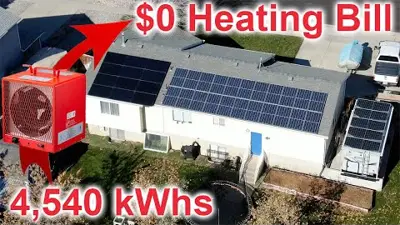
When our net metering balance hit 4,540 kWh, I started the winter heating our whole house with a 5,600 Watt electric space heater that cost $136, planning to switch back to the natural gas furnace if we ran low. We never needed the furnace, so our heating bill was zero.
It works because the house is well insulated. I raised the attic insulation to R60 and air-sealed around doors and windows. We also switched to a ventless heat pump clothes dryer. A whole-house heat pump would be about 3 times more efficient, but at $5,000 to $7,000 installed it would take 20 to 28 years to pay off, so I'll switch to one when our air conditioner compressor reaches the end of its life.
 ▶ Watch the space heater video
Home solar videos
▶Zero Heating Bill This Winter: I Used 4,540 kWh of Excess Solar with a $136 Space Heater!
I had a lot of excess solar electricity so I used it to heat my entire house all winter using a 5,600 Watt electric space heater.
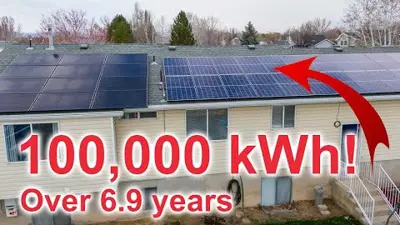 ▶
▶My Grid-Tied Solar Panels Have Now Produced 100 MWh! | How Are We Using All That Electricity???
After 6.9 years our 9.98 kW of rooftop solar panels have produced 100 MWh of electricity! Plus I share additional insights into my electrical experiments and graphs showing insights into how we’re using our solar electricity.
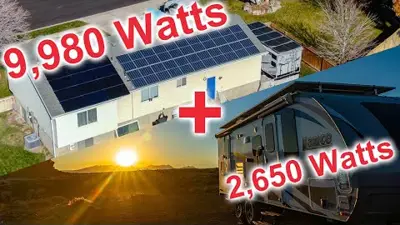 ▶
▶2023 Solar Insights: Housetop + Off-Grid RV Recap of Our Solar Adventures!
Now that we’re in 2024 I can review all the electrical production data for my 9.98 kW grid-tied rooftop solar array as well as my 2.65 kW RV solar array and how much they’ve produced as well as other insights now that we’ve had our grid-tied array for 6+ years and RV array for 2 years.
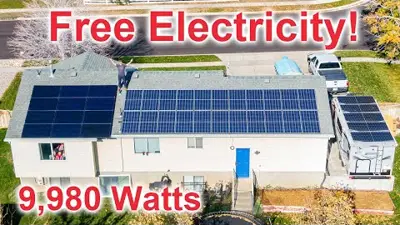 ▶
▶How Long Did It Take Us To Break Even On Our DIY Solar Installation?
I worked on our DIY solar installation for hundreds of hours in 2017 and 2019 and now our solar panels have generated as much electricity as our install cost us and we now have free electricity not only for our house, but also for driving around in electric cars!
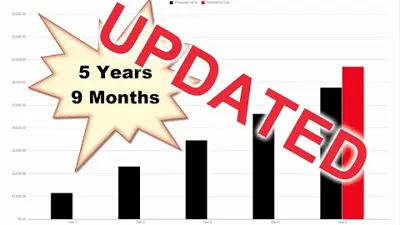 ▶
▶5 Years & 9 Months Later...Has Our DIY Grid Tied Solar Broken Even Yet?
In August 2017 our solar panels began producing electricity. In 2019 I looked back at the 2018 production to calculate our break even period at 5 years and 9 months.
 ▶
▶My Rooftop Solar Array Has Now Produced 50,000 kWh of Electricity in 3 Years 9 Months!
Late in the day on August 14th 2017 my rooftop solar array was turned on and began producing electricity from the sun! It has now been 45 months, or 3.75 years since then and we also expanded the size of the system in 2019.
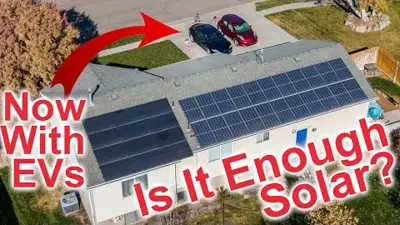 ▶
▶I Tracked 3 Years Of My Solar Production vs Home Electricity Consumption | Here's The Results
In this video I review how well our rooftop solar power production has covered our household electricity needs PLUS adding two electric cars.
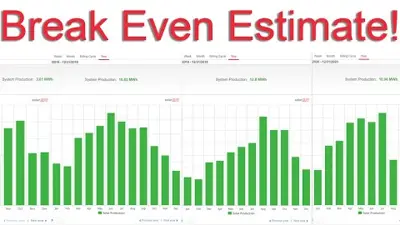 ▶
▶How Much Energy Has Our Rooftop Solar Produced After 3 Years?
This video is a 3 year checkpoint showing our rooftop solar power production over that time, and a quick summary of the annual production figures. I also review the installation cost and new updated projected break even point.
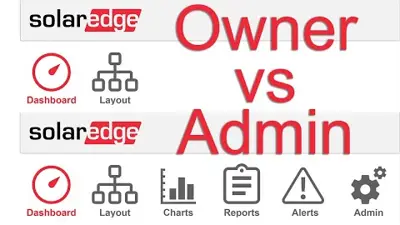 ▶
▶SolarEdge Rooftop Solar Panel Monitoring Dashboard vs Administrative Interface
In this video I review the differences between the home owner's view of the SolarEdge monitoring portal, and what the administrator sees.
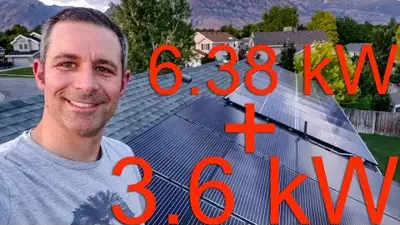 ▶
▶My Actual Costs to Expand My DIY Rooftop Solar Array for MORE POWER!
In this video I review my planning, design and costs associated with expanding my rooftop solar array to 9.98 kW.
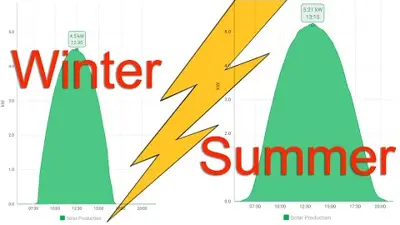 ▶
▶How Much Does Rooftop Solar Power Production Vary Between Summer and Winter?
In this video I review my real world solar power production comparing winter vs summer on my south facing rooftop solar array as well as two of my neighbors who have east/west and east only facing solar panels.
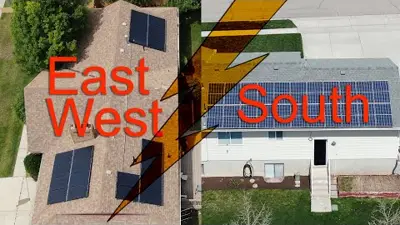 ▶
▶Solar Power Generation Comparison | East/West vs. South Facing Roof
My neighbors and I have nearly identical solar installations except that my system is only south facing, and my neighbor's system is only east/west. Which system produces the most electricity?
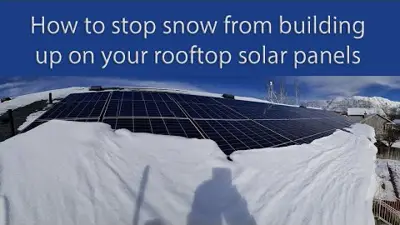 ▶
▶First winter lesson learned; how close to edge of roof should solar panels be to avoid snow buildup?
During my first winter of having solar panels on the roof of my house I found the snow would slide off the panels, the pile up on the 6 inches of roof below and cause a backup of snow that didn't go anywhere for days hampering solar power production.
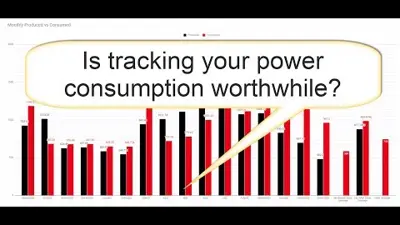 ▶
▶My house's rooftop solar production vs electricity consumption with over a year of data
I've had my rooftop solar panels producing electricity now for 17 months, and during that time I've been keeping a log of the production of the panels, and my house's electricity consumption. In this video I go over what I did to log the data, and what the resulting graphs show.
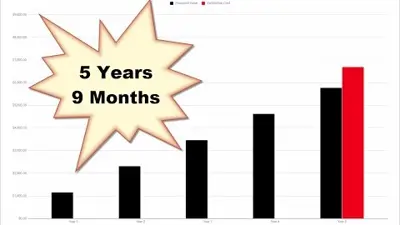 ▶
▶How Quickly Can DIY Solar Pay For Itself?
My solar installation break even period is 5.79 years or 5 years and 9 months.
 ▶
▶My DIY Grid-Tied Rooftop Solar Installation
My story and cost breakdown of installing my own rooftop solar panels using REC TWINPEAK 2 290 Watt panels, mounted on SnapNrack rails and mounts connected to a SolarEdge SE7600A-US inverter paired with SolarEdge P300 power optimizers.